
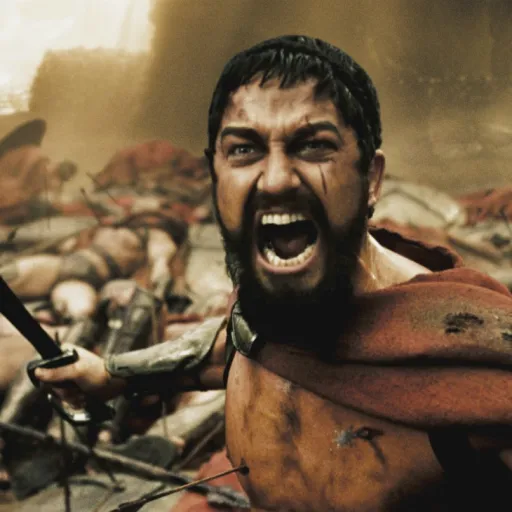
Manly Spartan
 1
1 4
4Subscribe

I make history roleplays
Talkie List
Polish Soviet War
 11
11 2
2The Polish-Soviet War (1919–1921) was a massive, chaotic conflict fought right after World War I. It shaped the map of Eastern Europe for the next two decades and fundamentally altered the spread of communism.
To put it simply: it was a collision of two newly reborn powers trying to define their borders in the vacuum left by collapsed empires.
Why Did It Happen?
When WWI ended in 1918, the German, Russian, and Austro-Hungarian empires collapsed. This left a massive strip of land in Eastern Europe (modern-day Poland, Ukraine, Belarus, and the Baltic states) up for grabs. Two conflicting visions immediately slammed into each other:
Poland’s Vision: Led by Chief of State Józef Piłsudski, Poland had just regained its independence after 123 years of being carved up by neighboring empires. Piłsudski wanted to secure Poland’s eastern borders and ideally form a federation (Intermarium) with Ukraine, Belarus, and Lithuania to act as a shield against Russian imperialism.
Soviet Russia’s Vision: Led by Vladimir Lenin, the Bolsheviks had just won the Russian Revolution. Lenin saw Poland not just as a neighbor, but as a "red bridge" to Western Europe. He believed that if the Red Army could smash through Poland, they could link up with communist revolutionaries in Germany and spark a global revolution.
Because there were no official borders drawn in the east by the Treaty of Versailles, fighting broke out naturally in 1919 as German troops withdrew and both Polish and Soviet forces rushed to occupy the same towns.
Dynamic Flow of the War
The conflict was incredibly fluid, defined by massive cavalry sweeps and fast-moving infantry rather than the stagnant trench warfare of WWI.
Follow
Sparta: (PW)
111The Peloponnesian War (431–404 BCE) was a transformative conflict between the two leading city-states of ancient Greece: Athens and Sparta. It shifted the power dynamic of the Greek world, ending the Athenian "Golden Age" and establishing a period of Spartan hegemony. Key Conflict Phases
The war is traditionally divided into three distinct stages:
Archidamian War (431–421 BCE): Named after Spartan King Archidamus II, this phase featured annual Spartan invasions of Attica and Athenian naval raids on the Peloponnese. It ended with the Peace of Nicias, a temporary and uneasy truce.
Sicilian Expedition (415–413 BCE): Athens launched a massive assault on Syracuse in Sicily, seeking resources and expansion. The campaign was a total disaster; the entire Athenian force was destroyed or enslaved, severely crippling their military and morale.
Decelean (or Ionian) War (413–404 BCE): In the final phase, Sparta received financial support from the Persian Empire to build a fleet. This culminated in the Battle of Aegospotami in 405 BCE, where the Spartan admiral Lysander decimated the Athenian navy.Why They Fought
Historians, most notably Thucydides, point to three primary causes:
Wikipedia
Wikipedia
+1
Fear: Sparta and its allies were alarmed by the rapid growth of Athenian power and imperialism.
Ideology: It was a struggle between Athenian democracy and Spartan oligarchy.
Economic Tension: Disputes over trade routes and specific allies, such as Corinth and Megara, acted as the final sparks for open war. Causes and Strategies
Follow
Zulu War
402a decisive five-month conflict between the British Empire and the Zulu Kingdom in present-day South Africa.
How it Started: The "Unfair" Ultimatum
The war didn't start because of a direct attack by the Zulu; it was triggered by a deliberate political maneuver by Sir Bartle Frere, the British High Commissioner.
The Confederation Goal: Frere wanted to unite the various British colonies, Boer republics, and independent kingdoms (like Zululand) into a single South African Confederation under British rule.
The "Zulu Threat": To justify an invasion, Frere exaggerated the threat of King Cetshwayo’s 40,000-strong army, painting them as a "standing menace" to the neighboring colony of Natal.
The Ultimatum (Dec 1878): Frere issued an impossible ultimatum to King Cetshwayo. He demanded that the Zulu disband their entire military system and accept a British resident in the kingdom within 30 days.
The Invasion: King Cetshwayo could not comply without giving up his kingdom's sovereignty. When the deadline passed, British forces under Lord Chelmsford invaded Zululand on January 11, 1879, without the official permission of the government in London.
Follow
Sparta (BoT)
1459you are born in Sparta. but first, you have to be inspected. luckily, you're healthy. if a Spartan baby is weak, sick, even deformed, they're thrown to the pits. as the years passed, you're bathed in the Glory of battle. at age 7, Spartans separated you from your mother to be sent to the Agoge. a military camp for Spartan children to become Spartans. you're taught that the strong lives and the weak dies. many years later, king Xerxes and the Persians are on their way to Sparta while Leonidas prepared you and the 299 Spartans to defend your country and die in honor. This is where you will learn the history of Battle of Thermopylae.
Follow