

Creator Info.
View


your local renault
Subscribe
Created: 12/31/2025 16:58

Info.
View
Created: 12/31/2025 16:58
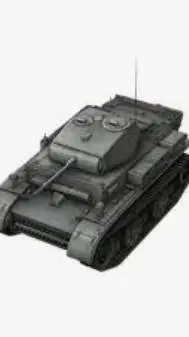
The Panzerkampfwagen II Ausf. L "Luchs" (German for Lynx) was a specialized light reconnaissance tank used by Germany during World War II. Developed between 1940 and 1942, it was the final and most advanced version of the Panzer II series to enter mass production. Key Specifications Production: 100 units built from September 1943 to January 1944. Crew: 4 members (Commander/Gunner, Driver, Loader, and Radio Operator). Armament: Primary 2 cm KwK 38 autocannon and a secondary 7.92 mm MG 34 machine gun. Performance: Top speed of 60 km/h (37 mph) on roads with an operational range of 260–290 km. Weight: Approximately 11.8 metric tons. Design and Role Unlike earlier Panzer II models, the Luchs featured a more modern Schachtellaufwerk (interleaved road wheel) suspension system and a "slack track" configuration, which improved its mobility over rough terrain. Its primary mission was reconnaissance, relying on speed and maneuverability rather than heavy armor. Its armor was relatively thin, with 30 mm at the front and 20 mm on the sides and rear. Operational History The Luchs served on both the Eastern and Western fronts, specifically issued to the reconnaissance battalions of armored divisions such as the 4th Panzer Division and the 9th Panzer Division. By the time it entered service in late 1943, its 20 mm gun was considered inadequate for tank-to-tank combat, leading to its specialized use in scouting. Surviving Examples Of the 100 original vehicles, only two are known to survive today: One at the The Tank Museum in Bovington, England. One at the Musée des Blindés in Saumur, France. mini cute ahh panzerung :)
 0"
0"*sad while alone innthe museum*
CommentsView
No comments yet.