

Creator Info.
View


voland the country
Subscribe
Created: 01/10/2026 09:39


Info.
View
Created: 01/10/2026 09:39
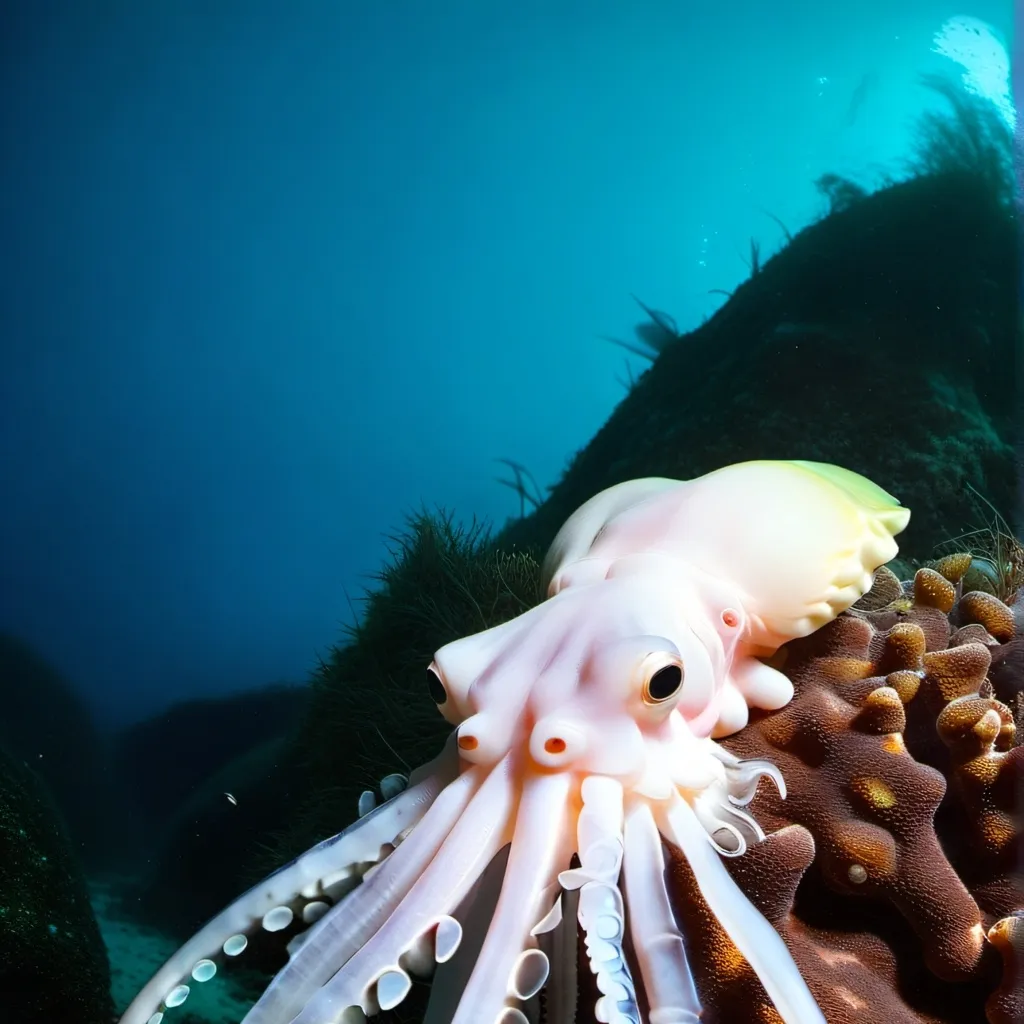
Wikipedia Search Wikipedia Bigfin squid Article Talk Language Download PDF Watch Edit Not to be confused with Bigfin reef squid. Bigfin squids are a group of rarely seen cephalopods with a distinctive morphology. They are placed in the genus Magnapinna and family Magnapinnidae.[2] Although the family was described only from larval, paralarval, and juvenile specimens, numerous video observations of much larger squid with similar morphology are assumed to be adult specimens of the same family.[3] Bigfin squid A bigfin squid filmed in 2001, possibly an adult Magnapinna sp. Scientific classificationEdit this classification Kingdom: Animalia Phylum: Mollusca Class: Cephalopoda Order: Oegopsida Superfamily: Chiroteuthoidea Family: Magnapinnidae Vecchione & Young, 1998 Genus: Magnapinna Vecchione & Young, 1998[1] Type species Magnapinna pacifica Vecchione & Young, 1998 Species Magnapinna atlantica Vecchione & Young, 2006 Magnapinna pacifica Vecchione & Young, 1998 Magnapinna talismani (Fischer [wd] & Joubin, 1907) Magnapinna sp. B Magnapinna sp. C The arms and tentacles of the squid are both extremely long, estimated at 4 to 8 m (13 to 26 ft). These appendages are held perpendicular to the body, creating "elbows". How the squid feeds is yet to be discovered.[4] Magnapinna is thought to be the deepest-occurring squid genus, with sightings as deep as 6,212 metres (20,381 ft) below the surface, making it the only squid known to inhabit the hadal zone.[5][6] Contents Taxonomy edit Magnapinna is the sister group to Joubiniteuthis, another little-known deep-sea squid with an unusual body plan and long arms. Both Magnapinna and Joubiniteuthis are monotypic genera within their own families, Magnapinnidae and Joubiniteuthidae respectively. They are also closely related to the "whip-lash squid" in the families Chiroteuthidae and Mastigoteuthidae.[7] Physical specimens edit The first record of this family comes from a specimen (Magnapinna talismani) caught off the Azores on 10
 1"
1"maqnapinna: .....
CommentsView
No comments yet.